
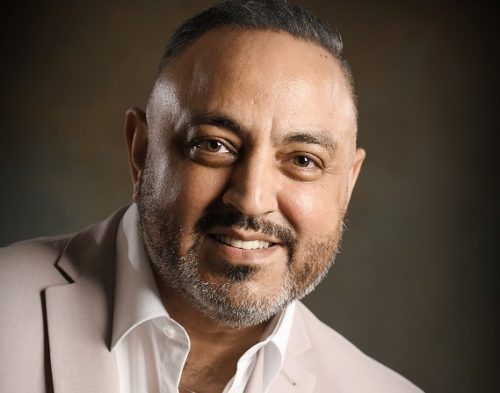
Don’t Let Someone Else’s Ignorance Become Your Identity
By Dr Amo Raju OBE DL
Growing up with cerebral palsy was complicated. I could walk, but I walked differently, and as a child you quickly discover that anything different can become a target.
I experienced bullying, including being laughed at and having my walk mocked. Those moments stayed with me much longer than they should have. What perhaps hurt most wasn’t the physical difference itself, but the way other people made me feel about it.
There were also cultural expectations about what a disabled boy could or couldn’t become. At times, I felt that people had already decided my future for me.
My book, Walk Like a Man, allowed me to revisit those experiences honestly. It isn’t simply a story about disability. It’s about what happens when other people’s assumptions start becoming your own.
The people who saw me
Living with CP meant dealing with things other children simply didn’t have to think about: learning to walk differently, coping with people’s reactions, and constantly being reminded that I was somehow “different”.
What kept me going was having people around me who saw me, rather than simply seeing my disability.
My father was probably the single biggest influence. He never treated me as someone who should be wrapped in cotton wool because I had CP. He encouraged me to get on with life, to have a go, to be independent and, most importantly, not to feel sorry for myself.
He was a working man and a great believer in resilience. He taught me that having a disability might mean doing something differently, but it didn’t mean accepting that I couldn’t do it.
That attitude became part of me. There were plenty of times when CP made life harder, and times when I wondered why I had been dealt this particular hand. But my father’s attitude was essentially: “You’ve got it, so get on with it.”
Looking back, I realise that may have been one of the greatest gifts he could have given me. He didn’t allow my disability to become an excuse for limiting my ambition.
The change I want to see
I want us to stop seeing cerebral palsy before we see the person.
CP can affect the way someone walks, communicates or moves, but it doesn’t determine their intelligence, ambition, personality or potential.
I would like every child with CP to grow up believing that the question isn’t “What can I do despite my disability?” but “What do I want to achieve, and what support do I need to get there?”
We need greater expectations, better opportunities and fewer assumptions. Most importantly, we need to stop making disabled people prove their worth before society gives them an opportunity.
To the child being laughed at today
I’d say this: do not allow somebody else’s ignorance to become your identity.
The people who laugh at you today don’t get to write the story of your life. Make sure that one day they read it with envy.
I know that’s difficult to believe when you’re young and being bullied. I know, because I’ve been there. But the child being laughed at today could become tomorrow’s CEO, teacher, doctor, entrepreneur, artist, politician or whatever they choose.
And if somebody tells you that you can’t do something because you’re disabled, don’t waste too much time arguing with them. Just get on with proving them wrong.
From my experience to my work
My experiences eventually gave me a very simple realisation: if I had struggled because people underestimated me, there must be thousands of others experiencing the same thing.
That took me into the voluntary and disability sectors, and ultimately to Disability Direct, where I spent around 30 years as CEO, working to give disabled people and carers a stronger voice.
My journey has now taken me much further. Taking wheelchairs and other mobility equipment to disabled people living in poverty in Punjab is particularly personal, because it connects my disability advocacy with my family’s heritage. I’ve learned that a wheelchair isn’t simply a piece of equipment. For someone who has been unable to move independently, it can mean education, employment, dignity, independence and the ability to take part in their community.
So perhaps my journey from the bullied kid to where I am today isn’t really about proving the bullies wrong.
It’s about making sure the next generation of those with CP, or any other impairment, doesn’t have to fight the same battles I did.
Dr Amo Raju OBE DL is a charity consultant, keynote speaker and Deputy Lieutenant of Derbyshire. He was CEO of Disability Direct for around 30 years and is the author of Walk Like a Man: From Limited to Limitless. He runs From Poverty to Possibility, delivering wheelchairs and mobility aids to disabled people in rural Punjab. https://amoraju.com/